Verified local resource
Pittsburgh Bulk Trash Pickup and Curbside Refuse Rules
The City accepts named household bulk examples with weekly curbside refuse, but electronics, refrigerant appliances, tires, chemicals, and construction materials need another route.
Information last verified August 18, 2026
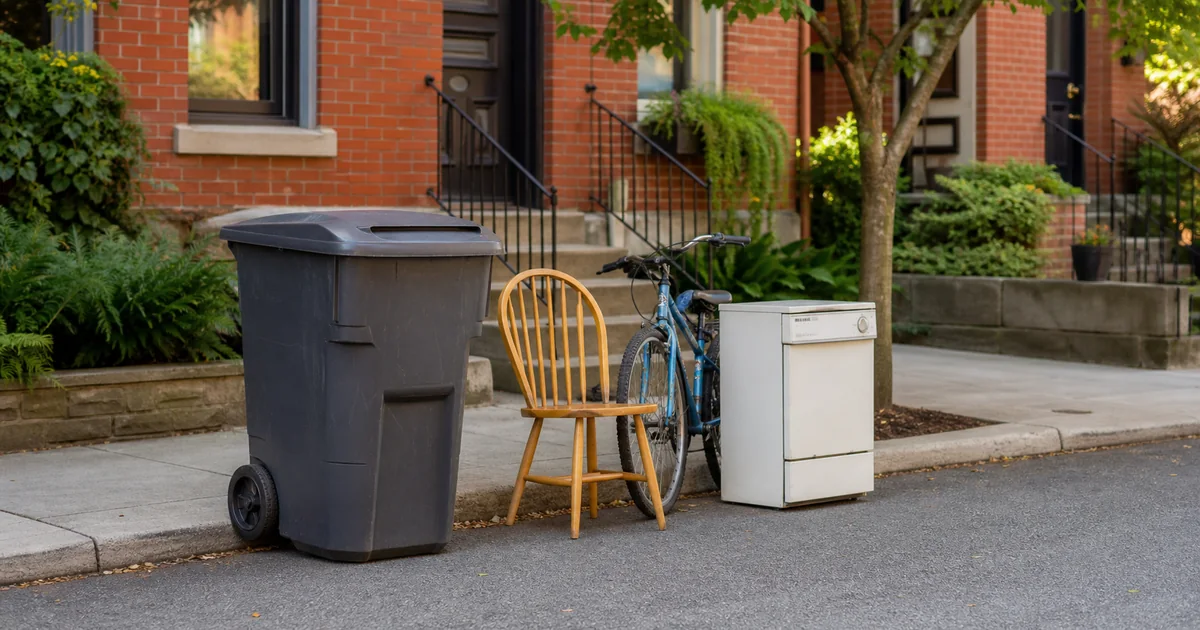
Check the item before moving it
The City of Pittsburgh collects common household refuse weekly and names several bulky household items on its accepted list. That does not create an all-purpose large-item service. The material still has to fit the City’s current curbside rules, and some of the hardest objects to move—refrigerators, televisions, tires, masonry, and chemical containers—are specifically excluded.
Use the City’s Curbside Refuse page as the controlling item source. Then use the Pittsburgh pickup schedule guide to confirm the regular refuse day and any holiday delay for the exact address.
If an object is not named and does not clearly fit a named category, ask Pittsburgh 311 before putting it out. The City’s own page uses broad terms such as “bulk waste,” so guessing from size alone can result in a rejected set-out.
Items the City names as accepted
The current curbside-refuse page includes these examples in addition to common household trash:
- Furniture such as chairs, end tables, and shelving
- Bicycles
- Larger household items such as garden tools and ironing boards
- Roasters and grills
- Small appliances, excluding electronic waste and refrigerant equipment
- Bulk waste that otherwise follows City rules
- Fewer than five easy-to-lift yard-waste bags; the City encourages composting drop-off sites for yard debris
Treat examples as examples, not permission to substitute a hazardous or materially different object. A compact appliance can still be excluded if it is electronic waste or contains refrigerant. A cabinet made of household furniture materials is different from a countertop or construction component on the City’s prohibited list.
Items that need another disposal route
| Keep out of Pittsburgh curbside refuse | Why this guide routes it elsewhere |
|---|---|
| Tires | The City excludes tires from curbside pickup and lists separate recycling options |
| Computers, televisions, and covered electronic devices | The City excludes e-waste and lists separate electronics resources |
| Refrigerators, air conditioners, and other refrigerant appliances | The City excludes Freon appliances from curbside refuse |
| Hazardous, infectious, explosive, or flammable material | These materials require a program equipped for the hazard |
| Batteries, light bulbs, and wet or oil-based paint | The City’s prohibited list identifies them for other disposal options |
| Bricks, cement, glass blocks, countertops, and other construction material | Construction debris is not part of ordinary residential curbside service |
| Auto parts | The City excludes car and automobile parts |
| Carpeting installed by a professional | The City specifically excludes professionally installed carpeting |
For televisions, computers, monitors, and related devices, use our Pittsburgh electronics recycling guide. For paint, pesticides, solvents, automotive fluids, and household chemicals, start with the Allegheny County household hazardous waste guide. Those programs have their own registration, residency, acceptance, and fee rules; curbside timing does not replace them.
Container, bag, and bundle limits
Ordinary refuse must be prepared under the City’s set-out standards even when a bulky object is also present.
- A refuse container must have a tight-fitting lid and may not exceed 35 gallons.
- A sealed plastic refuse bag may not exceed 35 pounds.
- A refuse bundle must be less than three feet long.
- Stored refuse containers must be durable, water-tight, and fitted with a close-fitting lid.
- A property owner or landlord must provide enough container capacity to prevent overflow.
Do not interpret the 35-gallon limit as a 35-pound container limit; the City states capacity for cans and weight for individual bags. Splitting one overloaded bag into compliant sealed bags is different from leaving loose material beside the container. Bundling also does not convert an excluded construction material into accepted refuse.
The City’s accepted list says fewer than five easy-to-lift yard-waste bags can be included, while encouraging residents to use Public Works composting drop-offs. That narrow statement should not be expanded to an unlimited yard cleanup. Confirm the current yard-debris rules for branches, bag material, and seasonal collections on the City schedule page.
Sharp household refuse requires protective packaging
The City publishes two specific safety preparations:
- Put needles, syringes, and lancets in a hard plastic container with a tight-fitting plastic lid and label it as medical waste.
- Wrap sharp objects such as broken glass or sharp metal in heavy paper, then place them in a box reinforced with tape or string.
These instructions are designed for the named household sharps. They do not authorize infectious material, which remains on the City’s prohibited list. They also do not make a large pane of window glass or construction debris acceptable. When the object falls outside the City’s wording, confirm another route rather than improvising packaging.
Set-out and retrieval times
The City gives a three-part curbside window:
| Step | City time |
|---|---|
| Earliest set-out | 6:00 p.m. on the night before collection |
| Latest set-out | 6:00 a.m. on collection day |
| Container storage deadline | 10:00 p.m. on collection day |
The 6:00 a.m. time is the resident’s deadline. It is not a promise that a truck arrives at that hour. Put only confirmed accepted items at the property’s normal collection point within that window.
The City also says refuse should not accumulate on an abutting sidewalk, street, or vacant ground. Keep refuse stored in appropriate containers until the allowed set-out period. If a large item will sit outside the normal window because a private carrier is handling it, coordinate that timing with the carrier rather than labeling it as City pickup.
A decision process for appliances
“Appliance” is not one disposal category. Identify how the item works before deciding:
- Small, non-electronic, non-refrigerant household appliance: the City’s accepted examples may apply.
- Television, computer, monitor, or covered electronic device: excluded from refuse; use an electronics program.
- Refrigerator, air conditioner, dehumidifier, or another refrigerant appliance: excluded from curbside refuse; use a refrigerant-appliance option listed by the City.
- Item with a battery, fuel, oil, or chemical reservoir: do not assume the appliance example covers it. Identify and route the hazardous component first.
This material-based check is more reliable than asking whether the object is “small enough.” The City expressly bases exclusions on e-waste, refrigerant, auto-part, and hazardous-material categories.
What to do when the item is uncertain
Use a short description that includes material, dimensions, and hazards. “Old machine” is less useful than “countertop toaster oven with no battery” or “window air conditioner containing refrigerant.” Check the current City page and, when the match is still unclear, ask 311 before set-out.
Do not rely on a photo of a neighbor’s collection or rules published for another municipality. Use the City of Pittsburgh source for a Pittsburgh service address.
If the item is eligible but too heavy for safe placement, a private service may be more appropriate. The City’s accepted list does not state that crews will take any item regardless of weight, handling risk, or preparation.
Final curb check
- Confirm the exact address’s regular refuse day and any City-listed holiday delay.
- Match each bulky object to a current City accepted example.
- Remove electronics, tires, refrigerant appliances, chemicals, auto parts, and construction material.
- Use a lidded container no larger than 35 gallons for contained refuse.
- Keep each sealed bag at or below 35 pounds and each bundle under three feet.
- Package household sharps exactly as the City directs.
- Put material out after 6:00 p.m. the night before and by 6:00 a.m. on collection day.
- Retrieve containers by 10:00 p.m.
This check protects residents from the most common category error: treating “bulk” as a universal exception. Pittsburgh’s curbside service accepts useful household examples, but the material and preparation rules still decide what belongs at the curb.
Primary sources
- Curbside Refuse
City of Pittsburgh · Retrieved 2026-08-18
- Collection Schedule and Newsletter
City of Pittsburgh · Retrieved 2026-08-18
Frequently asked questions
Does Pittsburgh collect furniture with curbside refuse?
The City's accepted examples include chairs, end tables, and shelving. Check the current City page or ask 311 when an item does not match a named example.
Can I put a refrigerator or air conditioner out for Pittsburgh bulk pickup?
No. The City excludes refrigerant appliances such as refrigerators and air conditioners from curbside refuse and directs residents to another disposal option.
How heavy can a Pittsburgh trash bag be?
A sealed plastic refuse bag may not exceed 35 pounds. The City also limits lidded refuse containers to 35 gallons and bundles to less than three feet in length.